
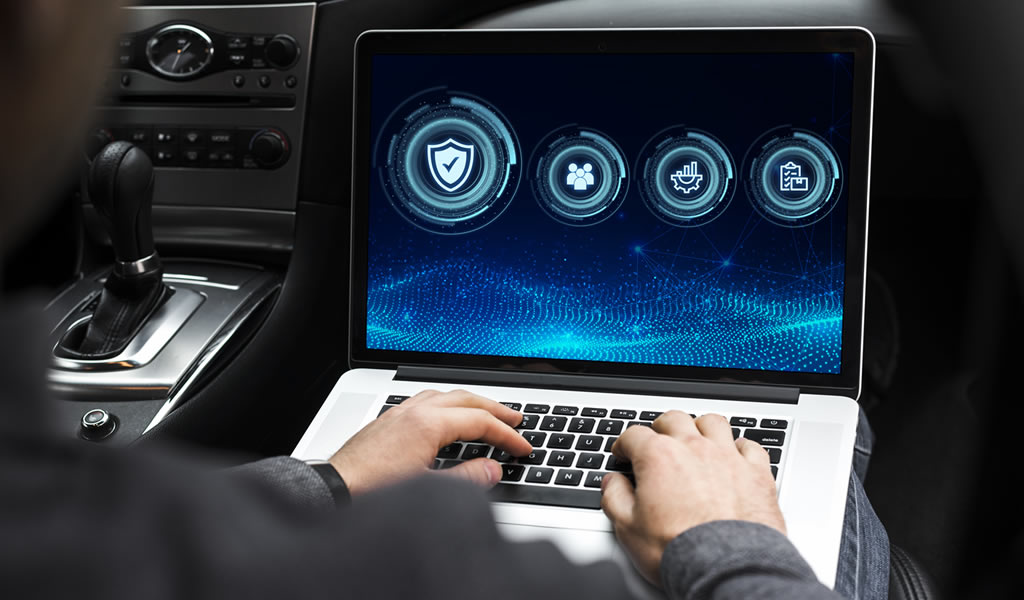
Fleet digitalisation is no longer a future trend — it is a present-day competitive necessity. Across Europe, businesses that have embraced digital fleet management are outperforming those still relying on paper-based processes, manual logbooks, and spreadsheet-based reporting. The transition to a fully digital fleet operation is simpler than most managers expect, and the return on investment is measurable from the very first month.
At its most basic level, fleet digitalisation means replacing manual, paper-based processes with automated, connected systems. This includes digital trip recording, automated maintenance scheduling, electronic driver communication, and cloud-based reporting — all accessible from a single dashboard on any device, at any time.
One of the most immediate benefits of fleet digitalisation is the elimination of manual logbook keeping. In Germany, the Finanzamt requires precise documentation of all business trips made with company vehicles. Drivers using company cars for private purposes must either pay a monthly flat tax — known as the one-percent rule — or maintain an accurate logbook to prove the proportion of business versus private use. Manual logbooks are notoriously error-prone, and errors can result in significant tax penalties during audits. MetronTrack eliminates this risk by automatically recording every trip with full timestamp, distance, route, and purpose data — generating perfectly compliant documentation with zero manual effort.
Beyond tax compliance, digitalisation enables a level of operational insight that is simply impossible with paper-based systems. Fleet managers can generate detailed reports on vehicle utilization, fuel consumption, driver behavior, and maintenance status in seconds, rather than spending hours compiling data from multiple sources. This real-time visibility enables faster, more informed decision-making — allowing managers to identify problems before they become expensive crises.
Remote fleet monitoring is another transformative capability enabled by digitalisation. Rather than relying on phone calls or physical check-ins to confirm vehicle locations and driver status, managers can see the entire fleet on a live map at any moment. Geofencing alerts notify managers instantly when vehicles enter or leave designated areas, while after-hours alerts flag any unauthorized vehicle use.
Driver communication also becomes more efficient in a digital fleet environment. Route updates, delivery instructions, and urgent messages can be communicated instantly through connected systems, reducing delays and improving customer service levels. Paperwork that once took days to process can be handled digitally in minutes.
For businesses concerned about the complexity of the transition, MetronTrack’s plug & play OBD2 system makes getting started remarkably straightforward. There is no need for professional installation, complex software setup, or lengthy training programs. Vehicles are connected in under two minutes, and the full dashboard is operational immediately. Digitalisation does not have to be disruptive — with the right tools, it can be seamless.
Comments are closed.